
From Classroom to Company: What Teaching Taught Me About Building an Educational Brand
Transitioning from classroom teaching to educational entrepreneurship requires more than business strategy. This article explores how core teaching principles—clarity, care, and learner-centered design—inform the foundation of a values-driven tutoring brand.
You can’t lead a tutoring company the same way you lead a classroom — but the principles of good teaching quietly shape both.
Teaching trained me to do things no business course ever could: to read a room, to listen before responding, and to design learning experiences that feel challenging but achievable. Day after day, I learned that clarity builds confidence, connection builds trust, and care sustains effort.
When I founded Kalvian Academy, those instincts didn’t disappear — they became the foundation of the brand.
Every curriculum choice, every visual decision, every parent email is grounded in pedagogy. We ask the same questions I asked as a classroom teacher: What does the learner need right now? What might feel overwhelming? What will help them move forward with confidence?
This approach doesn’t just shape instruction — it shapes culture. It creates consistency, trust, and coherence across everything we do.
Good teaching scales when it becomes design — and that’s the bridge between classroom and company.

The Teacher as Curator: Guiding Attention in an Age of Overstimulation
In today’s overstimulated learning environment, attention has become a critical skill. This article explores how teachers act as curators—designing lessons that respect cognitive limits, sustain focus, and make meaningful learning possible in a distracted age.
Today’s learners don’t need more information — they need guidance on what deserves their attention.
We are teaching in the most cognitively noisy era students have ever known. Screens compete for every second, notifications fracture focus, and information is endless. In this context, attention has become the new literacy.
The role of the teacher has shifted. Great teaching today isn’t about delivering more content — it’s about curating learning experiences that cut through cognitive overload and make thinking possible.
At Kalvian Academy, lessons are intentionally designed around the rhythm of human focus: brief, purposeful input; structured pauses; and reflection before output. This approach respects how the brain actually learns. It helps students sustain engagement, process deeply, and build real learning stamina — not just compliance.
Teaching isn’t just about delivering knowledge — it’s about directing awareness.

Beyond Grades: Building Lifelong Learners in the Age of Metrics
Grades alone don’t build confident learners. This article explores how a metrics-driven education culture creates fear of failure—and how prioritizing mindset, persistence, and productive struggle helps students become resilient, lifelong learners.
We've taught students to chase grades, not growth—and many are burning out before they even reach high school.
The metrics-driven culture of education has made students risk-averse. They avoid challenge for fear of failure, equating grades with identity. Yet real learning requires discomfort—the "productive struggle" that builds resilience, curiosity, and long-term growth.
At Kalvian Academy, progress isn't measured by marks; it's measured by marks; it's measured by mindset. We celebrate persistence, curiosity, and the courage to try again. Every small step forward is acknowledged, reinforcing that effort matters more than perfection.
When students learn to value progress over perfection, confidence becomes their compass.

The Science of Motivation: Why Students Learn Better When They Feel Seen
Students don’t learn well from teachers they don’t feel connected to — and neuroscience explains why.
The brain’s reward system relies heavily on dopamine, a neurotransmitter released when we experience recognition, progress, and a sense of belonging. When students feel seen and valued, their brains are more receptive to learning. They engage more deeply, take academic risks, and persist longer through challenges.
Conversely, when students feel invisible or disconnected, motivation drops — not because they “don’t care,” but because their brains are not receiving the signals that support sustained effort and focus.
At Kalvian Academy, motivation is intentionally built into every session. We name small wins. We celebrate progress. We explicitly connect effort to outcome so students can see why their work matters.
Connection isn’t a soft skill — it’s the foundation of learning.
Students don’t learn well from teachers they don’t feel connected to — and neuroscience explains why.
Learning isn’t just cognitive; it’s biological.
The brain’s reward system relies heavily on dopamine, a neurotransmitter released when we experience recognition, progress, and a sense of belonging. When students feel seen and valued, their brains are more receptive to learning. They engage more deeply, take academic risks, and persist longer through challenges.
Conversely, when students feel invisible or disconnected, motivation drops — not because they “don’t care,” but because their brains are not receiving the signals that support sustained effort and focus.
At Kalvian Academy, motivation is intentionally built into every session. We name small wins. We celebrate progress. We explicitly connect effort to outcome so students can see why their work matters.
This isn’t fluff or feel-good teaching. It’s brain-based pedagogy.
Connection isn’t a soft skill — it’s the foundation of learning.
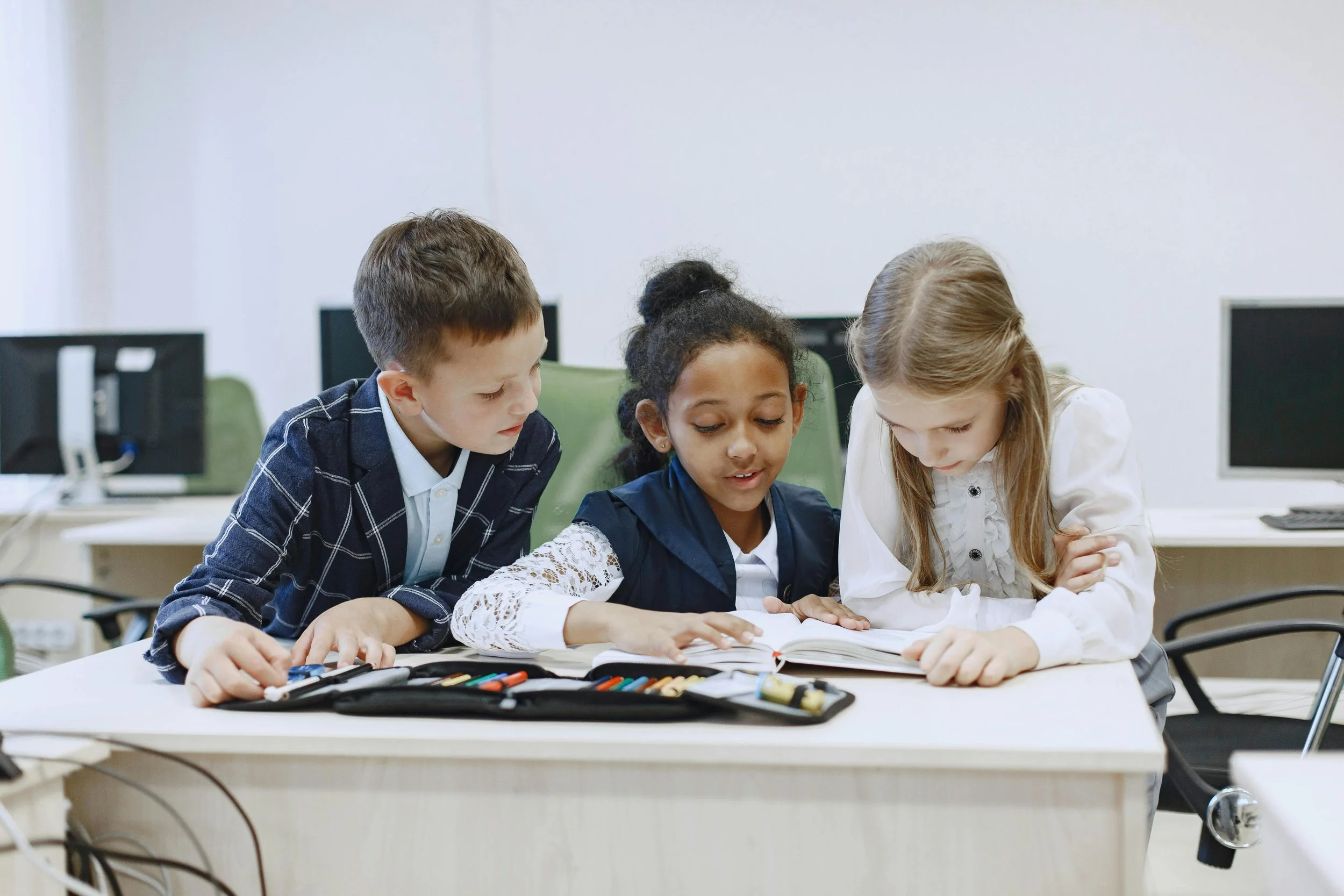
Teaching Through Joy: Why Emotional Safety Is the Prerequisite to Academic Rigour
Academic rigour isn’t just about harder tasks — it requires emotional safety. This article explores how joy, connection, and confidence help Grades 4–8 students engage, persist, and succeed in learning, especially in language classrooms.
You can’t academically challenge a student who doesn’t feel safe.
In education, rigour is often framed as difficulty: harder tasks, higher expectations, more pressure. But research in affective neuroscience tells a more nuanced story. When students experience stress or fear, the brain’s ability to encode and retain new information is significantly reduced.
For many learners — particularly in language classrooms — the fear of being wrong is more paralyzing than the grammar itself.
Students may understand the rule. They may recognize the vocabulary.
But without emotional safety, they hesitate to speak, withdraw from participation, and disengage from the very practice that builds fluency.
At Kalvian Academy, we approach rigour differently. Joy is not the opposite of rigour — it is the foundation of it. We intentionally build classroom culture through:
low-stakes opportunities for risk-taking
warmth, humour, and human connection
clear routines and consistent expectations
visible progress students can recognize in themselves
When students feel emotionally safe, their willingness to engage shifts dramatically. They speak sooner. They try more often. They persist longer. Cognitive energy moves away from self-protection and toward learning.
That is when real rigour becomes possible. Not because expectations are lowered —but because students are finally able to meet them.
Confidence is the quiet catalyst of academic growth.
Build it first; fluency follows.

The Motivation Crisis: Why Students Are Disengaging—and What Families Can Do Now
Student disengagement is rising across Ontario. This article explores how systemic pressures impact motivation and offers strategies for families to support learning, rebuild confidence, and spark curiosity through personalized tutoring.
Across Ontario, a concerning trend is emerging: more students are showing up at school unmotivated to learn. We’re now seeing the long tail of pandemic learning disruptions intersect with an under-resourced education system — the perfect storm for disengagement.
This isn’t about effort or curiosity—it’s about the system itself. Large class sizes, rigid curricula, standardized testing pressures, and mounting administrative tasks create conditions where students struggle to engage. Behaviour challenges, gaps in learning, and low confidence are not individual failures—they are symptoms of a system stretched beyond its capacity. Even the most passionate teachers cannot compensate for these structural limits.
After more than a decade in the classroom, I’ve seen firsthand how these systemic pressures shape students’ confidence and motivation. Teachers report students giving up more quickly, avoiding challenges, or refusing independent tasks—not because they don’t care, but because they no longer feel capable.
The results speak for themselves. EQAO scores highlight the reality: too many students are leaving school without mastering foundational skills, and motivation—the spark for lifelong learning—is declining.
Families don’t need more worksheets—they need structured, relational learning experiences that rebuild both competence and confidence. So it’s no surprise that parents are increasingly turning to private tutoring to supplement the classroom. Personalized, consistent support can help students rediscover engagement, build confidence, and strengthen the skills the system cannot always provide.
At Kalvian Academy, we offer focused weekly sessions designed to do just that: support learning, spark curiosity, and create an environment where students can thrive academically and personally. While we cannot fix the system overnight, we can help students achieve their potential, one session at a time.
For parents who want more than worksheets and homework, targeted support is no longer optional — it’s essential.

The Bilingual Brain: What Language Learning Teaches Us About Focus, Memory, and Resilience
Learning French isn’t just about vocabulary — it strengthens the brain. This article explores how Core French builds focus, memory, executive function, and resilience in Grades 4–8 students, giving them skills that last a lifetime.
What if learning French wasn’t just an academic requirement — but cognitive strength training?
Neuroscientists have long known that language learning reshapes the brain, but the picture is even more compelling than most people realize. MRI studies reveal that bilingual learners develop denser gray matter, more efficient neural connectivity, and stronger executive function — the system responsible for attention, working memory, task-switching, and emotional regulation.
In other words, learning a new language doesn’t just expand vocabulary. It builds a brain that is better at learning anything.
This is why Core French matters, even for students who won’t use French every day. The benefits are cognitive, not just communicative — and they extend far beyond the classroom.
At Kalvian Academy, we approach French as mental cross-training. Rather than drills and memorization, our sessions are structured to strengthen the brain systems that support all learning:
Activities that challenge focus and sustained attention
Routines that stretch working memory
Problem-solving tasks that build cognitive resilience
Opportunities for students to switch between ideas, forms, and structures — reinforcing mental flexibility
The goal isn’t just accuracy; it’s adaptability. Not just fluency; resilience.
Fluency may fade over time. Cognitive flexibility lasts a lifetime.
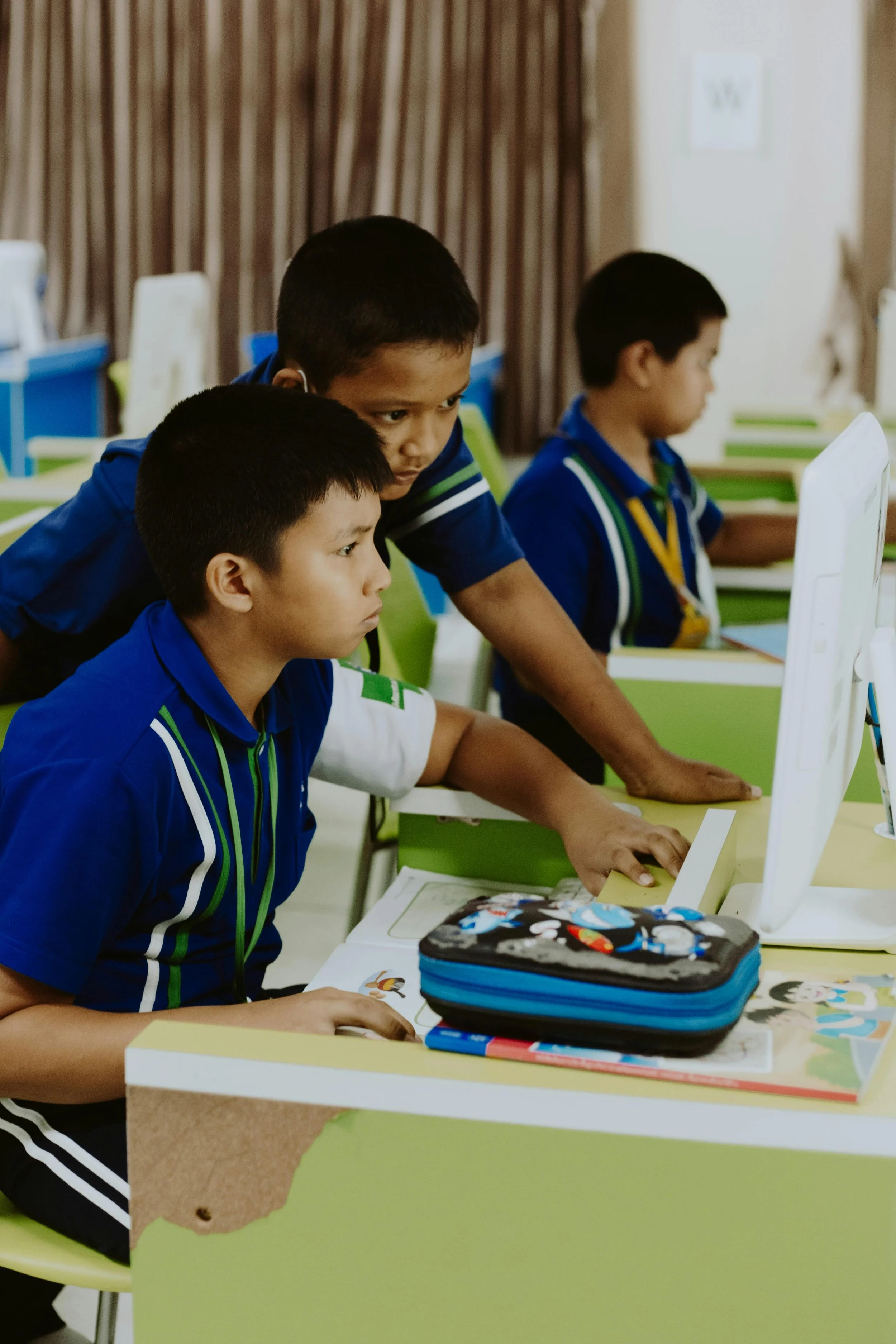
The Listening Paradox: Why Students Hear French Every Week But Don’t Understand It
Listening in French isn’t passive — it’s a skill that must be taught. This article explores how Grades 4–8 students develop comprehension, confidence, and real understanding through targeted, structured listening exercises.
Students can listen to French for years and still not understand it. Why? Because they’ve never been taught how to listen.
Listening isn’t passive — it’s an active cognitive process. Strong listeners are constantly predicting, inferring, confirming, rejecting, and reinterpreting meaning in real time. Yet in many classrooms, listening is treated like a test: press play, answer questions, move on.
But listening is a skill, and skills must be built.
At Kalvian Academy, we develop listening stamina the same way athletes build muscle: through short, focused reps with immediate feedback. Students learn to:
✔️ identify key words
✔️ recognize sound patterns
✔️ use context clues
✔️ ignore filler sounds
✔️ listen for meaning, not perfection
When listening becomes something students are trained to do — not something they’re judged on — comprehension grows faster, confidence rises, and French finally becomes accessible.
True comprehension begins when we stop testing listening — and start teaching it.

The Art of the Scaffold: Why Structure Frees Students, It Doesn’t Restrict Them
Structure doesn’t restrict learning — it enables it. This article explores how scaffolds like checklists, sentence frames, and guided outlines help Grades 4–8 students gain clarity, build confidence, and become independent learners.
Freedom doesn’t come from removing structure — it comes from mastering it.
We often assume that scaffolds limit creativity. But in teaching, structure is what actually makes freedom possible.
A writing checklist doesn’t confine expression — it supports it. A sentence frame doesn’t limit thought — it clarifies it.
At Kalvian Academy, our scaffolds are bridges, not barriers. They help students move from confusion to clarity through:
Step-by-step speaking supports
Structured reading strategies
Guided writing outlines
These tools don’t replace thinking — they make thinking visible. They give students the cognitive space they need to focus on meaning, accuracy, and confidence.
And here’s the best part: once students internalize these structures, they no longer need them. They begin to play, improvise, and create independently — in French or in any subject.
Because structure doesn’t silence creativity. It builds it.
Do you think schools strike the right balance between structure and independence?
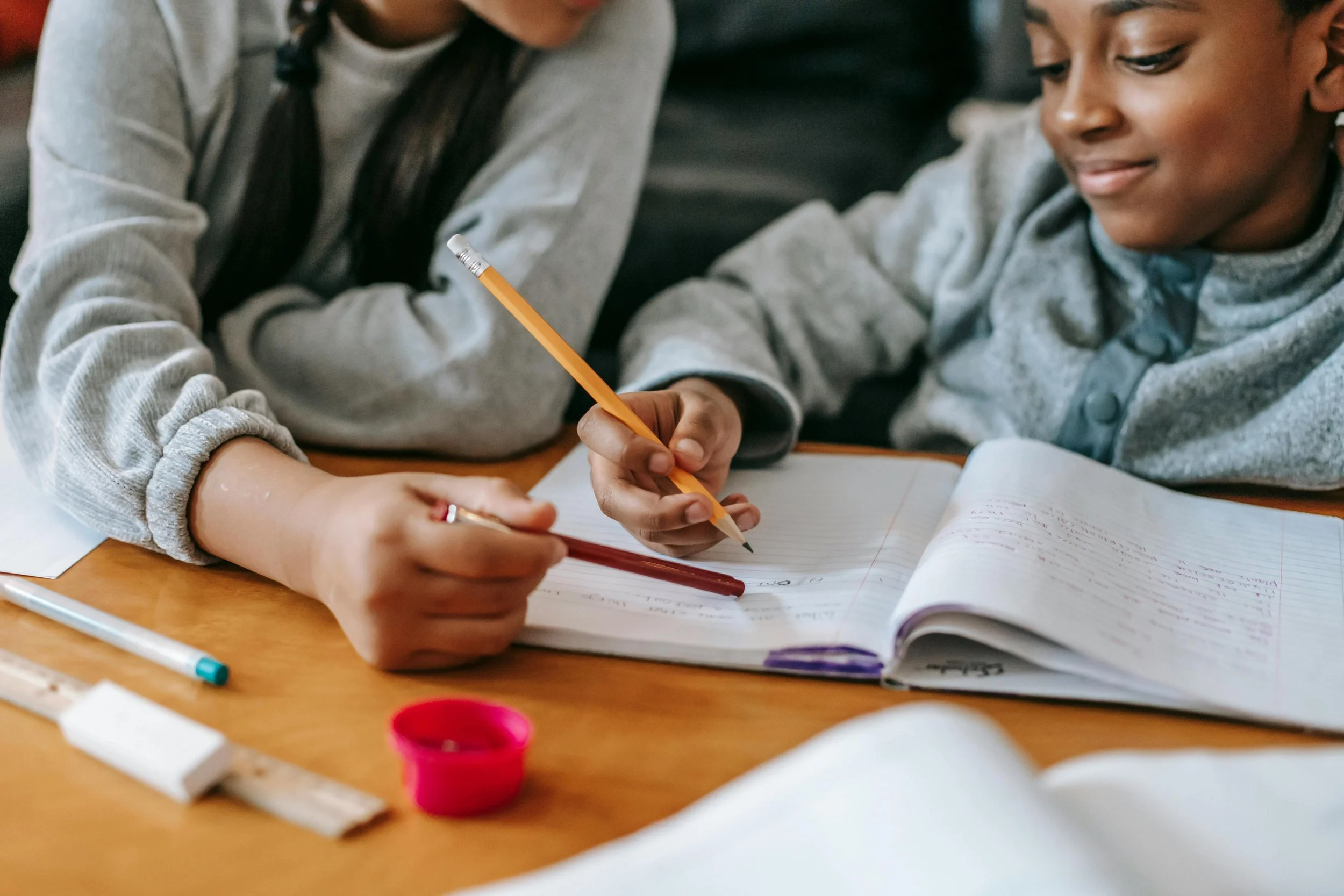
Confidence Isn’t the Result of Success — It’s the Cause of It
Confidence isn’t just a feeling — it’s a skill that drives learning. This article explores how structured strategies in listening, speaking, and writing help Grades 4–8 students build self-efficacy, take risks, and persist through challenges.
Research shows that a student’s confidence, or self-efficacy, predicts their willingness to persist far more than raw ability.
Confidence isn’t something you’re born with — it’s something you build.
In Grades 4–8, confidence becomes the make-or-break factor in learning. Students who believe they can improve are more likely to take risks, ask questions, and persist through challenges.
Too often, we treat confidence as emotional rather than teachable — as something a student either “has” or “doesn’t have.” In reality, it’s a skill we can design for.
At Kalvian Academy, we approach confidence the same way we approach writing, reading, speaking and listening: by breaking it into trainable parts.
Listening guides help students focus on key details so they don’t fear “missing everything.”
Sentence starters lower the risk of being wrong and give students a safe way to participate.
Writing checklists transform overwhelm into structure and small wins.
Each scaffold gives students one more reason to think, “I can do this.” Once they believe that, real learning begins. Parents often notice it first — the moment their child stops saying, “I can’t,” and starts saying, “Let me try.”
Confidence grows when success feels replicable, not random. That’s what we build at Kalvian Academy: structured confidence that grows with every lesson. We don’t just celebrate outcomes — we teach the steps that lead there.
How do you intentionally teach confidence in your classroom or at home?